"When a man makes up
his mind to solve any problen, he may at first be met with dogged opposition,
but if he holds on and keeps searching he will be sure to find some sort of solution. The trouble with most people
is that they quit before they start."--Thomas Edison
We do not conquer through brillance. We conquer by continuing."
REMEMBER YOUR BASICS
(Basic moves) can be used to oppose, ride,
borrow, or steal force, faint, sprain, dislocate, fracture, rupture, maim, rip, tear, claw, hook, poke, slice, rake, buckle,
check, maneuver, trip, grab, lock, twist, pinch, butt, bite, throw, pull, along with numerous other accomplishments.
- Edmund Parker, Infinite Insights, Volume 2
TIPS TO KEEP YOUR HOME TRAINING UP & RUNNING
IRON ARM KUNG
FROM THE DAY TO DAY TRAINING YOU MAY FIND YOUR SELF GETTING A LITTE BUMPED OR BRUSIED FROM THE CLASH
OF ARMS BLOCKING. AS TIME GOES BY AND WITH THE MORE DRILLS YOU DO THE HARDER YOUR ARMS WILL BECOME BUT, IT IS IMPORTANT
TO REMEMBER NOT TO TRIAN THIS ASPECT OF THE ART TO MUCH AS THIS "HARD" TRAINING MAY HAVE SHOW UP LATER IN LIFE W/ AHCES
& PAINS THAT YOU WILL NOT WANT. THE USES OF PADS CAN GIVE YOU THE FLASE IDEA THAT YOU CAN BLOCK WELL BUT WITH OUT
THE TIME SPENT BLOCKING REAL PUNCHES WITHOUT PADS HOW DO YOU KNOW THE REAL FEELING. HAVING SAID THIS, YOU ONLY GET ONE
BODY TAKE CARE OF IT AND IT WILL DO YOU THE SAME FOR YOU.
R.I.C.E.
It is sometimes a small
bruise or a pulled muscle or even that not so funny bone that may nag us after a class. It
is important to take care of even the small injury so that we may keep up with our training. Proper care in the first
day after injury can reduce the time you're sidelined. Should you suffer a sprain, strain, pull, or other muscle or joint
injury, treat it with R.I.C.E. -- Rest, Ice, Compression and Elevation. R.I.C.E. can
relieve pain, limit swelling and protect the injured tissue, all of which help to speed healing. Heat may be helpful once
the injury moves out of the acute phase and swelling and bleeding has stopped. Moist heat will increase blood supply to the
damaged area and promote healing.
"THE GIFT"
IT IS IMPORTANT TO TREAT EVERYDAY WITH AS MUCH RESPECT AS YOU CAN . TRY TO GET OUT AND HAVE SOME FUN LIFE
IS WAY TO SHORT AND MUST BE LIVED TO THE FULLEST EVERYDAY MAKE A LIST OF THE THINGS THAT YOU HAVE ALWAYS WANTED TO DO AND
THEN TAKE ACTION TO DO SOMETHING ABOUT IT!
PROF. CERIO HAD ONCE BEEN QUOTED AS SAYING "YESTERDAY IS GONE ,WHO KNOWS ABOUT TOMORROW, TODAY IS A GIFT,THAT
IS WHY THEY CALL IT THE PRESENT!"
"There is no greater study that the study of self.
Knowing
who we are and what we are.
Knowing our strengths and weaknesses.
Knowing what we can do and what we cannot do.
Through
this concept we will develop ourselves mentally,
physically,and spiritually so that we will
have an awareness of our
being."
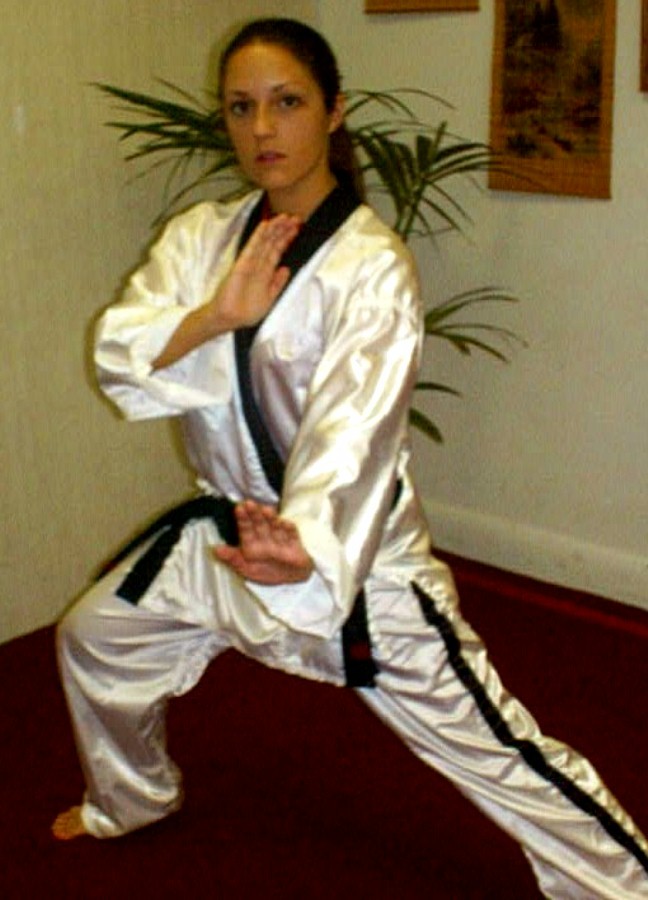
"A STUDENT WHO HAS ATTAINED MASTERY IN THE ARTS REVEALS IT IN EVERY ACTION"
"In Judo, he who thinks is immediately thrown."
Robert
Linssen Judo and Psycho-Physical Unity
BLACK BELT REQUIRMENTS:
1.PERSISTENCE 2.PERSISTENCE 3.PERSISTENCE
Martial Arts Terminology
Atemi Waza- Japanese: Atemi meaning body blows( from Ateru, to strike, and Mi, body and Waza meaning technique.
Atemi and blows aimed at the vital or weak points of an opponents body in order to paralyze, by means of intense pain.
B
Balance - Two triangles, head and chest. If they point in different directions, balance is off.
Bapak - Indonesian: Father.
Used to convey affection to a mentor, or founder of a style.
Beset - Indonesian: rear stepping sweep or tripping obstacle. / beset dalem
/ Inside sweep, beset luar / outside sweep-.
Basics - Simplified moves that comprise the fundamentals of any art. Divided into stances, maneuvers, blocks,
strikes, parries, kicks, and methods, etc.
Block - A defensive maneuver used to check or hinder an opponent.
Bob and Weave - Body maneuvers used to avoid an attack. A "bob" involves a vertical movement of the body. A "weave"
is a horizontal side to side movement of the body.
Borrowed Force - An opponent's force which is used to defeat him. This can be accomplished by going with the
opponent's force or, upon occasion, going against his force. The concept allows your opponent's force to enhance the effectiveness
of your action.
Bodhidharma -India: (Da Mo) prince of a small tribe in South India who became a warrior priest and 28th patriarch
of the Buddhist faith. Known for setting the ground work for Shaolin chuan-fa.
Budo - Japanese:"The Way of Combat" A name given in the 20th century for all martial arts in general, with the
emphasis on their aspects. In addition to the physical discipline and movement, it implies an attitude of mental fortitude
and a distinct ethical code.
C
Check - To restrain, hinder, or repress an opponent from taking action. This is accomplished by pressing, pinning,
or hugging an opponent usually at the joints so that it minimizes his leverage and nullifies his actions.
Ch’uan Fa - Chinese- "Way of the Fist." the name originally given by the Shaolin Monks to their fighting
art.
Chi Kung -Chinese- the practice of cultivating chi (energy)
Chin Na - Chinese- “seize and control.” Chinese ancestor of jujitsu which uses traps, locks, and
pressure point attacks as well as holds and throws.
Chi - A Chinese term used to describe the powers that can be generated when the mind and body are totally
unified. It involves total complete synchronization of mind, breath, and strength to achieve maximum force. It is that extra
inner force created by the precise synchronization of the conscious and subconscious mind.
Chow,William
- (AKA Thunderbolt) studied Hung Gar kung fu /Kosho-Ryu Kempo one of seven Black Belts promoted by James Mitose (signed
by Thomas Young)
Chojun, Miyagi- Founder of Goju-Ryu Karate-Was the first to introduce Kempo Karate to the U.S .In
1934 he came to the Island of Kauai Hawaii and taught more than a 100 students. Miyagi is the base for the Mr. Miyagi character
of the movies. Circular Movements - Moves that predominantly loop or follow a curve. Such moves can be used defensively or
offensively.
Classical -
Traditional methods and moves used by the so called, "pure system" of Martial Arts.
Claws
- Refers to the fingertips as used in a technique.
Clock Principle - A system in teaching, to help
the student to visually imagine the direction which he is to follow. Generally asked to think of himself as being in the middle
of a big clock facing 12 o'clock with 6 o'clock to the rear, 3 and 9 to his right and left and all other number in their respective
places.
Close Range Encounters - Action that occurs within elbow and knee distance. Common Sense - It is
that sixth sense that many lack. It is the ability to overcome problems and difficult situations by using logic.
Crescent
- A path of action that can be compared and paralleled to a hooking type maneuver.
D
Dan -
Japanese - Black Belt levels 1-10 in Kempo and most budo.
Dekiti-Tirsia-Siradas
-Tagalog- A combat system of it is defined as a close-quarter in-fighting
system which is made up of close-quarter sectoring tactics. Which is a higher method of training for reality in combat. this
art puts a direct emphasis on the development of effective footwork along with the correct application of body and striking
angles. Grandmaster Jerson "Nene" Tortal
Dim Mak -
Chinese:lit.(poison hand) the art of delivering damaging waves of chi to destroy your attackers organs.
Dojo - Japanese: "Place of the Way." Kempo training hall.
E
Economy of Motion - Any movement that takes less time to execute and still causes the intended effect.
Eighteen Hand Movements - The original number of hand movements first developed to defend or attack an opponent.
These moves supposedly formed the foundations of Shaolin Boxing.
Erishi Shou- Chinese " Twenty Palms." Black Belt blocking exercise.
F
Feint - A misleading move used to deceive an opponent.
Focus - Is the result of the entire body working as a unit at the very instant a target is struck. The concentration
of mind (knowledge) breath, strength, and methods of execution must unite as one in conjunction with body momentum, torque,
gravitational marriage, timing, speed, penetration, etc.
Form - Is literally a short story of motion. These motions are offensive
and defensive maneuvers incorporated into a dance for purposes of learning, home training and exercise. They are usually done
without a partner.
Formulate - The combining of moves into a systematized order, which when properly organized, develops into a
logical and practical sequential arrangement.
Full Contact - Is the professional method of free style (sparring) where actual hitting is accepted as part of
the rules.
G
Guru:Indonesian: Leader of Practice
Guru Tuan: Indonesian: 'prince' teacher, uncle
H
Hammering - A particular method of striking which resembles the action of a hammer pounding a nail from various
angles.
Hiken -Japanese:"hidden fist." The Kempo fist/palm salute.
Hachi Ten Do -Japanese: " Eight Point Way" Basic blocking exercise in four sections.
Harimau - Indonesian; Sumatran Tiger Style, low to the ground, creeping movement to upset an opponents root.
The tiger it’s self is found only on the island of Sumatra.This tiger has
webbing on its paws that make it a great swimmer. There are only 400 or so of these tigers left in existence making them a
very endangered species.
J
Judo - Japanese: lit.(the gentle way)sport Jujitsu
Jurus: fundamental movement done alone - the 'root' of pencak silat
Ju jitsu - Japanese: "gentle art." Techniques of throwing, joint locking, holding, and choking as well as escape
techniques employed in self defense.
K
Kali - An ancient Philippine martial art, which is also known by other names, such as Eskrima, Arnis, Arnis de
Mano, and FMA.
Kara-te -
Japanese: for "empty hand." Officially changing Chinese Kara (T'ANG) Te -to Japanese
Kara Te (Empty Hand) October 25, 1926 / The conference of Okinawan Karate master
at which was agreed the term Karate be adopted as the official name of this Martial Art.
Kata - Japanese: "formal exercise" or "form." A pattern of predetermined fighting movements.(thirteen forms are
required for Black Belt.).
Karambit - Indonesian: small curved blade, the shape of the blade is related to animist beliefs about the power
of tigers, the blade is in the shape of a tiger claw It’s found among the
cultures of Malaysia, Indonesia, and the Philippines. In all of these cultures it may have been used as an agricultural tool
as well as a weapon.
Kuda-kuda - Indonesian: horse stance (kuda = 'horse')
Kung fu - Chinese for skill acquired through practice."Kong shou- Chinese for "empty hand"Ki - A Japanese term
for Chi.
Langkah: footwork exercises (lit. 'step')
Locks - Moves that lock the joints or body parts of your opponent to restrain him from taking further action.
It combines methods of pushing and pulling.
Long Range Encounters - Action that occurs at arm length or the length of a leg.
M
Maha Guru - Indonesian: Senior
Teacher, Professor
Meditation - A brief period of mental relaxation used in the arts to eliminate outside distractions from the
mind in order to fully concentrate on activities that are to be learned in class. Taking the time to do this helps to avoid
unnecessary injury which might otherwise occur.
Mui Fa Shou - Chinese " Plum Flower Hands" Black Belt blocking exercise.
P
Ping-Te - Chinese (Ping) / Japanese (Te): lit. “Peaceful Hand”
The name given to the base techniques
of the art P.S.T.
Putar Kepala - Indonesian - head turning throw ; putar = rotate, kepala = head
Pakul - Indonesian - to strike or collide
S
San Chai Na -Chinese &Japanese: "Three Powers Controlling" Mind Body &Spirit.
Sapu - Indonesian - ankle sweep, torqueing throw. Sapu luar / Inside sweep,
/ Sapu dalem outside sweep.
Sempai -Japanese.:lit. second in command a senior student who serves Sensei as a model for technique.
Silat - Indonesian - literally "lightning" Combat usage of pentjak movements, the study of combat.
System - Is the unification of related concepts, principles, truths, and basic elements of a particular school
of Martial Arts.
Sapu Dalam - Indonesian - inside foot sweep
Sapu Luar - Indonesian - outside foot sweep
Sarong - Indonesian - wrap-around skirt-type garment common in Indonesia,
T
Take Down Maneuvers - Moves of defense or attack that cause an opponent to fall to the ground to immobilize,
restrain, control, or to further attack.
Talon - Refers to a grab attack as used in a technique.
Target Areas - Vital areas on your or your opponent's body which can cause injury or damage when struck.
Te - An Okinawain term which means "hand". Their Art was originally called Okinawa-te or "hand Art" of Okinawa.
This was later changed by the Japanese to karate meaning "empty hand".
Technique - Pre-planned moves that can be used defensively or offensively with successful results.
Telegraphing - Body language that often works against you. These movements warn your opponent of your intended
action and help to prepare him for his defense.
Traditional - Generally refers to those practitioners of the Martial Arts who adhere to custom or the original
concepts and moves of a particular system.
Trapping - Any stratagem designed to catch a natural weapon to prevent it from escaping.
W
Wing Chun -Chinese:lit. (beautiful Springtime) The common legend involves young woman who had refused the local
warlord's marriage offer. She asks a local buddhist nun, Ng Mui, to teach her boxing , she won her fight with the warlord
and married here first love, the art was later named after her Yim Wing Chun. Bruce Lee's base art.
Wu Shu-Chinese:Mandarin; national martial art of China
Z
Zen- Buddhist form of meditation perpetuated by Tamo (Daruma), Indaian
Prince.
Best e-mail I ever got !
Ok guys. This one is a tear jerker. Maybe it's just me though, but it
touched my heart. What a difference we can all make through one small action. Just one small step. Just
one act of kindness towards the human race. Wow, my eyes were opened at how we each have the power to make the difference
in someone's life, even in the smallest actions. Here's to being a better person, by being a kinder person. Go
out and make a difference in someone else's life
What would you do?....you make the choice. Don't look for a punch line, there isn't
one. Read it anyway. My question is: Would you have made the same choice?
At a fundraising dinner for a school that serves learning-disabled children, the father
of one of the students delivered a speech that would never be forgotten by all who attended. After extolling the school and
its dedicated staff, he offered a question: "When not interfered with by outside influences, everything nature does is done
with perfection. Yet my son, Shay, cannot learn things as other children do. He cannot understand things as other children
do. Where is the natural order of things in my son?"
The audience was stilled by the query.
The father continued. "I believe, that when a child like Shay, physically and mentally
handicapped comes into the world, an opportunity to realize true human nature presents itself, and it comes in the way other
people treat that child."
Then he told the following story:
Shay and his father had walked past a park where some boys Shay knew were playing
baseball. Shay asked, "Do you think they'll let me play?" Shay's father knew that most of the boys would not want someone
like Shay on their team, but the father also understood that if his son were allowed to play, it would give him a much-needed
sense of belonging and some confidence to be accepted by others in spite of his handicaps.
Shay's father approached one of the boys on the field and asked (not expecting much)
if Shay could play. The boy looked around for guidance and said, "We're losing by six runs and the game is in the eighth inni
ng. I guess he can be on our team and we'll try to put him in to bat in the ninth inning."
Shay struggled over to the team's bench and, with a broad smile, put on a team shirt.
His Father watched with a small tear in his eye and warmth in his heart. The boys saw the father's joy at his son being accepted.
In the bottom of the eighth inning, Shay's team scored a few runs but was still behind by three. In the top of the ninth inning,
Shay put on a glove and played in the right field. Even though no hits came his way, he was obviously ecstatic just to be
in the game and on the field, grinning from ear to ear as his father waved to him from the stands. In the bottom of the ninth
inning, Shay's team scored again. Now, with two outs and the bases loaded, the potential winning run was on base and Shay
was scheduled to be next at bat.
At this juncture, do they let Shay bat and give away their chance to win the game?
Surprisingly, Shay was given the bat. Everyone knew that a hit was all but impossible because Shay didn't even know how to
hold the bat properly, much less connect with the ball.
However, as Shay stepped up to the plate, the pitcher, recognizing that the other
team was putting winning aside for this moment in Shay's life, moved in a few steps to lob the ball in softly so Shay could
at least make contact. The first pitch came and Shay swung clumsily and missed. The pitcher again took a few steps forward
to toss the ball softly towards Shay. As the pitch came in, Shay swung at the ball and hit a s low gr ound ball right back
to the pitcher.
The game would now be over. The pitcher picked up the soft grounder and could have
easily thrown the ball to the first baseman. Shay would have been out and that would have been the end of the game.
Instead, the pitcher threw the ball right over the first baseman's head, out of reach
of all team mates. Everyone from the stands and both teams started yelling, "Shay, run to first! Run to first!" Never in his
life had Shay ever run that far, but he made it to first base. He scampered down the baseline, wide-eyed and startled.
Everyone yelled, "Run to second, run to second!" Catching his breath, Shay awkwardly
ran towards second, gleaming and struggling to make it to the base. By the time Shay rounded towards second base, the right
fielder had the ball ... the smallest guy on their team who now had his first chance to be the hero for his team. He could
have thrown the ball to the second-baseman for the tag, but he under stood the pitcher's intentions so he, too, intentionally
threw the ball high and far over the third-baseman's head. Shay ran toward third base deliriously as the runners ahead of
him circled the bases toward home.
All were screaming, "Shay, Shay, Shay, all the Way Shay"
Shay reached third base because the opposing shortstop ran to help him by turning
him in the direction of third base, and shouted, "Run to third! Shay, run to third!"
As Shay rounded third, the boys from both teams, and the spectators, were on their
feet screaming, "Shay, run home! Run home!" Shay ran to home, stepped on the plate, and was cheered as the hero who hit the
grand slam and won the game for his team.
"That day", said the father softly with tears now rolling down his face, "t he boys
from both teams helped bring a piece of true love and humanity into this world".
Shay didn't make it to another summer. He died that winter, having never forgotten
being the hero and making his father so happy, and coming home and seeing his Mother tearfully embrace her little hero of
the day!
AND NOW A LITTLE FOOTNOTE TO THIS STORY: We all send thousands of jokes through the
e-mail without a second thought, but when it comes to sending messages about life choices, people hesitate. The crude, vulgar,
and often obscene pass freely through cyberspace, but public discussion about decency is too often suppressed in our schools
and workplaces.
If you're thinking about forwarding this message, chances are that you're probably
sorting out the people in your address book who aren't the "appropriate" ones to receive this type of message. Well, the person
who sent you this believes that we all can make a difference. We all have thousands of opportunities every single day to help
realize the "natural order of things." So many seemingly trivial interactions between two people present us with a choice:
Do we pass along a little spark of love and humanity or do we pass up those opportunities and leave the world a little bit
colder in the process?
A wise man once said every society is judged by how it treats it's least fortunate
amongst them.
This is important information
for females of ALL ages
READ THIS AND LEARN
Through a Rapist's
Eyes (No Joke). Guys - please
forward to the female members of your family and all your female
friends
and associates.When this was sent to me, I was told to forward it to my lady friends. I forwarded it to most everyone
in my address book. My men friends have female friends and this information is too important to miss someone. Please pass
it along.
A group of rapists and date rapists in prison
were interviewed on what they look for in a potential victim and here are some interesting facts:
1) The first thing
men look for in a potential victim is hairstyle. They
are most likely to go after a woman with a ponytail,
bun, braid or other
hairstyle that can easily be grabbed. They are also likely to go after a
woman with long hair.
Women with short hair are not common targets.
2) The second thing men look for is clothing. They will look for women
who's clothing is easy to remove quickly. Many of them carry scissors
around specifically to cut clothing.
3)
They also look for women on their cell phone, searching through their
purse or doing other activities while walking because
they are off guard
and can be easily overpowered.
4) Men are most likely to attack & rape in the early morning,
between
5:00a.m. and 8:30a.m.
5) The number one place women are abducted from/attacked is grocery store parking
lots. Number two is office parking lots/garages. Number three is public restrooms.
6) The thing about these
men is that they are looking to grab a woman and quickly move her to another location where they don't have to worry ab out
getting caught.
7) Only 2% said they carried weapons because rape carries a 3-5 year
sentence but rape with a weapon
is 15-20 years.
8) If you put up any kind of a fight at all, they get discouraged because
it only takes a minute
or two for them to realize that going after you
isn't worth it because it will be time-consuming.
9) These men
said they would not pick on women who have umbrellas, or other similar objects that can be used from a distance, in their
hands.
Keys are not a deterrent because you have to get really close to the
attacker to use them as a weapon. So, the
idea is to convince these guys
you're not worth it.
10) Several defense mechanisms he taught us are: If someone
is following behind you on a street or in a garage or with you in an elevator or
stairwell, look them in the face and
ask them a question, like w hat time is it, or make general small talk: "I can't believe it is so cold out here",
"we're
in for a bad winter." Now you've seen their face and could identify
them in a line-up; you lose appeal as a target.
11)
If someone is coming toward you, hold out your hands in front of you
and yell STOP or STAY BACK ! Most of the rapists
this man talked to said
they'd leave a woman alone if she yelled or showed that she would not be afraid to fight back.
Again, they are looking for an EASY target.
12) If you carry pepper spray (this instructor was a huge advocate of it
and carries it with him wherever he goes,) yell I HAVE PEPPER SPRAY and holding it out will be a deterrent.
13)
If someone grabs you, you can't beat them with strength but you can by outsmarting them. If you are grabbed around the waist
from behind, pinch the attacker either under the arm (betwee n the elbow and armpit) OR in the upper inner thigh
VERY VERY HARD. One woman in a class this guy taught told him she used the underarm pinch on a guy who was trying to date
rape her and was so upset she broke through the skin and tore out muscle strands the guy needed stitches. Try pinching yourself
in those places as hard as you can stand it; it
hurts.
14) After the initial hit, always GO for the GROIN. I know
from a
particularly unfortunate experience that if you slap a guy's parts it is
extremely painful. You might think
that you'll anger the guy and make him want to hurt you more, but the thing these rapists told our instructor is
that
they want a woman who will not cause a lot of trouble. Start causing
trouble, and he's out of there.
15) When the
guy puts his hands up to you, grab his first two fingers and
bend them back as far as possible with as much pressure pushing
down on them as possible. The instructor did it to me without using much pressure,
and I ended on my knees and both knuckles
cracked audibly.
16) Of course the things we always hear still apply. Always be aware of
your surroundings, take
someone with you if you can and if you see any odd behavior, don't dismiss it, go with your instincts!!!
You may feel
a little silly at the time, but you'd feel much worse if the
guy really was trouble.
PLEASE READ THEN
FORWARD THIS TO EVERY WOMAN YOU KNOW, IT'S SIMPLE STUFF BUT
IT COULD SAVE HER LIFE
A Guide to a Happy Life
No one will ever get out of this world alive. Resolve therefore
to maintain a reasonable sense of value.
Take care of yourself. Good health is everyone’s major
source of wealth. Without it, happiness is almost impossible.
Resolve to be cheerful and helpful. People will repay you in
kind.
Avoid angry, abrasive people. They are generally vengeful.
Avoid zealots. They are generally humorless.
Resolve to listen more and to talk less. No one ever learns anything
by talking.
Be chary of giving advice. Wise men don’t need it and fools
won’t heed it.
Resolve to be tender with the young, compassionate with the aged, sympathetic with
the striving and tolerant of the weak and the wrong. Sometime in life you will have been all of these.
Do not equate money with success. There are many successful
moneymakers who are miserable failures as human beings. What counts most about success is how a person
achieves it.
"Support your athlete "
The best reason to wear an athletic supporter is so you can wear a protective cup. For the unfamiliar:
supporter come in two flavors: plain, and a kind of marsupial version that accepts a removable cup made of very hard plastic.
A well-placed blow in this region is not only agonizing; it can destroy a boy or a man!
While most boys and men can get by without athletic supporters, a lot more ought to wear cups.
Kids these days have helmets for practically everything—I wouldn't be surprised to see my sons wearing them for violin
practice. But surprisingly few boys wear cups for sports. I would make my sons do for Little League, Football or Hockey and
most defiantly in the dojo. If you have a son in this dojo, get him a cup; if you are a man in this dojo you should never
take a class without it!
"no ouch just ouss" !
sensei k p
The 8 point method of blocking without
blocking
The four directions of unbalancing by using half of the 8 point
method we begin to understand
the rudimentary fundamentals of
positioning our bodies to a place where as little energy as possible
is used to displace
re-direct route or otherwise foil our opponents
balance.
Using the scoop block a.k.a. 1 or 2 we may slip to the
inside or
outside as we let our attacker flow by into any various array of
joint locks chokes or strikes.
By using
the rising blocks 5& 6 we bring our attacker into more
direct strikes this is because the attacker tends to bring
his weight
forward towards his toes hence bringing his body into a more
direct center line this causes the attacker
to be routed back into his
heels making it easier for the practitioner to walk straight through
as we follow with
a multitude of hand strikes being careful to first
strike low into the body bringing the attackers head forward while
his weight is still on his heels making high elbows a perfect finish.
When the practitioner chooses to use
low blocks 7& 8 the attacker
will tend to lean forward into the center line making knees and
quick driving upward
hand strikes the optimal direct approach,
while slipping to the N.E. an N.W. can still be combined with these
motions
I find it to be almost better to stand the ground and simply
turn at the waist by doing this you bring the attacker to
you at a
higher rate of speed making it harder for him to regain his balance
before any number of arm bar choke or
joint lock is performed
also because the attacker will tend to lean towards his toes low
driving stomp kicks are very
potent to the pettilla and tibular.
While it is important to practice these basic fundamentals with
the arms of
the practitioner it is just as important to remember
that the arms do not really do the block it is the body by turning
to
the left or right by stepping forward or back our bodies make the
timing and target different for our attacker
thus making him make midflight adjustments or missing all together.
"There is no finish line. When you reach one goal, find a new one."
Chuck Norris
"Not to spew but, here's a few."
KP
"Finally a White belt, after a
lifetime of trianing.'
"Peace over power... First". K P Sr. Sensei
“It's best when the Bull can also be the Bullfighter" Olay!
KP Sr.Sensei
"The brilliant man doesn’t get that way by reading only one book in the library and a master martial
artist doesn’t either”. K P Sr. Sensei
“There are many things in this world you can get out without paying for; but attention isn’t one
of them”. K P Sr. Sensei
"Just good Concepts, not Con-jobs." K P Sr. Sensei
"No ouch... just ouss" K P Sr. Sensei
“Finally a White belt, after a lifetime of training."K P Sr. Sensei
“Every strong Tree had to grow through dirt, to reach up for the sky " K P Sr.
“Always train as if it is your last day in the dojo. One day it will be”. K P Sr. Sensei
"We must always look at our history and what we can take from it, but we must make our own History...in the
present" K P Sr. Sensei
" It's better to know how, and not have to; than to have to, and not know how, but the true art lies in not
having to use it at all. " K P Sr. Sensei
“We may fall many times, but we don’t fail till we blame somebody else for our own failure”. K P Sr. Sensei
“In teaching the arts ,we all serve chicken it just the flavor that make people love or dislike.” K P Sr. Sensei
“The safety of all , most come before all else”. K.P. Sr. Sensei
“There are many titles in the Martial Arts Sifu, Shihan,
Instructor, Sensei, Master, Hanshi but most important title you can have is that of student”.
K.P. Sr. Sensei
"Something
I tell all my new students " It's better to know how, and not have to; than to have to, and not know how, but the true
art lies in not having to use it at all. " sensei k p Sr
"If I may, I'd like to say, I look forward to a
day, of play, in the Way"! sensei k. p. Sr.
To all who have fought,
Over "nothing"............
"Nothing", will never
change!
Yours in the Arts, Sensei k.p. Sr.
The last quote was small code ---- his was too a old
student.... can you guess what his name is ?? "
"When your passion and purpose are greater than your fears and excuses,
you WILL find a way"! Believe it and you will achieve it!
" Wink Sensei "
GOOD, BETTER, BEST, NEVER LET THEM REST, UNTIL YOUR
GOOD IS BETTER, AND YOUR BETTER IS BEST.
There is no such thing as public opinion. There
is only published opinion.
Winston Churchill
"There was once one who thought himself above me.
And he was above me until he had that thought."
"A truth that's told with bad intent beats all
the lies that you can invent!"
The one who says "it can’t be done "should not interrupt
the one who is doing it!
Unknown - Prehaps someone who got it done!
"The knife... the older brother of the gun"
Mr. Bhat
"RUDENESS IS THE WEAK MAN'S IMITATION OF STRENGTH"
ERIC HOFFER 1902-1983
"Don't be like thunder. Don't brag
on your skills, and then be empty of anything real and solid. Remember, the lightning bolt does the damage, not the thunder."
Bryon Pence Sensei
Art reveals itself
in psychic understanding of the inner essence of things and gives form to the relation of man with nothing, with the nature
of the absolute. - Bruce Lee,The Tao of Jeet Kune Do
An artist's expression is his soul made apparent,
his schooling, as well as his "cool" being exhibited. Behind every motion the music of his soul is made visible.
Otherwise, his motion is empty and empty motion is like an empty word - no meaning. - Bruce Lee, The Tao Of Jeet Kune Do
A kata is like a poem from a Zen master - compact,
elegant, full of meaning, worthy of reflection. - Geir Store, Karate Kata Training
Life is too short to watch bad kata. - Geir Store,
Karate Kata Training
The consciousness of self is the greatest hindrance
to the proper execution of all physical action. - Bruce Lee, The Tao of J K D
Condition and guts take over where knowledge and skill
end. - Edmund Parker, The Zen of Kenpo
You can't hit and think at the same time. - Yogi Berra
Whether it is a big ship or little ship, the same
size hole placed correctly in the hull can sink it. - Edmund Parker, The Zen of Kenpo
He who hesitates, meditates in a horizontal position.
- Edmund Parker, The Zen of Kenpo
"Mankind must
put an end to war before war puts an end to mankind. "
John F. Kennedy
Being powerful is like being
a lady. If you have to tell people you are, you aren't.
Margaret Thatcher
Europe was created by history.
America was created by philosophy.
Margaret Thatcher
"WHAT AN ACCUSER ACCUSES YOU OF IS
GENERALLY WHAT HE IS GUILTY OF HIMSELF ! "
"Every strong Tree had to grow through dirt, to reach
up for the sky "
Sensei K.P. Sr.
"DON'T SEEK TO KNOW ALL THE ANSWERS, BUT DO SEEK TO UNDERSTAND
ALL THE QUESTIONS .
The ultimate aim of the art of Karate lies neither in
victory,
nor in defeat, but in the perfection of the
character of its participants."Soke Gishin Funikoshi
"Be moved by need and never greed, for
greed is the seed of all evil ." Great Grand Master Ed Parker
KNOWING OTHERS IS WISDOM, KNOWING YOURSELF IS ENLIGHTENMENT.
"When an enemy comes welcome him, and
when he goes
send him on his way."
"MAN SOULD NOT FEAR DEATH, BUT THE TIME HE HAS TO PREPARE
FOR IT."
E.K.P.
"Learn from the mistakes of others, or
you may not live
long enough to make them yourself."
THE ANGRY MAN WILL DEFEAT HIMSELF
IN BATTLE AS WELL AS IN LIFE .
-SAMURAI MAXIM
"FEAR NO
MAN ,BUT RESPECT ALL"!
DESTINY:
WHEN ONE COMES TO A FORK
IN LIFES ROAD, AND YOU ARE
PERPLEXED AS TO WHICH PATH TO FOLLOW.
DO NOT BE WORRIED FOR WHICHEVER PATH YOU TAKE,
THAT
WILL BE ONES DESTINY.
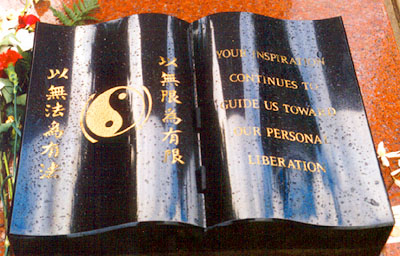
The philosophy of Kempo was best descibed by Bruce Lee when he commented on his art of Jeet
Kune Do;"To Have No Way As A Way;To Have No Limitations As A Limitation."
RANK:
ALTHOUGH BELT COLORS SHOW,
THEY ARE NO PROOF THAT YOU KNOW.
A BLACK BELT IS JUST A WHITE BELT WHO WORK HARD AND STAYED TRUE TO THE ART.
THERE
ARE MANY TITLES IN THE MARTIAL ARTS SIFU,INSTRUCTOR
SENSEI,MASTER,BUT THE MOST IMPORTANT TITLE YOU CAN
HAVE IS THAT
OF STUDENT.
"In order to understand the nature of others, we must first understand the nature of ourselves.
Realization
of the self is the key that will harmonize us with nature and anoint us with peace.
Riches of life = wisdom, knowledge,
and understanding.
That is what I strive for."
"STRIKE ME ONCE, SHAME ON YOU. STRIKE ME TWICE,
SHAME ON ME"
"Ride the horse in the direction it's going."
"Kindness....is an opportunity to leave a heart print on
someone's life". (Sensei's Sister Deb)
To fall seven times is to rise eight times.
Life begins
from now.
Ta Mo Founder of Chan (Zen) Buddhism
War and killing are wrong,
But so is it wrong not to be
prepared to defend oneself.
Thus shall it be...
We may not have knives, so make every finger unto a dagger.
Our
maces are confiscated, so make every fist unto a mace.
Without spears, every arm must be unto a spear,
and make every
open hand unto a sword.
Ta Mo, Spiritual Father of Kung Fu
"Those who know the truth
are not so great
as
those who love it;
Those who love the truth
are not so great
as those who live it."
"You cannot shake hands with a clenched fist."
"Seek Not to follow in the footsteps of the wise, seek what
they sought."
"He who chases two rabbits, goes home hungry."
"THE WILL TO PREPARE, PRECEDES THE WILL TO WIN!"
"If you want happiness for an hour ~ Take a nap
If you want happiness
for a day ~ Go fishing
If you want happiness for a month ~ Get Married
If you want happiness for a year
~ inherit a fortune
If you want happiness for a lifetime ~ Help someone else."
"We must always look at our history and what we can take
from it, but we must make our own History...in the present"
Sensei Kevin W. Pence
"Advice is what we ask for when we already know
the answer but wish we didn't" Erica Jong (1942-
"It's best when the Bull can also be the Bullfighter" OLAY!
Sensei
KP
KARATE CREED
I
come to you with only Karate: Empty Hands. I have no weapons, but should I be forced to defend myself, my principles, or my
honor; should it be a matter of life or death, of right or wrong, then here are my weapons -Karate: My Empty Hands.
SAN CHAI NA
THREE POWERS CONTROLLING = MIND, BODY,
& SPIRIT
Physical :movement/exercise (Stretch, Strength, Stamina, stature, Speed/Coordination nutrition (solids, liquids,
air and sunlight) detoxification/rest (sleep, regeneration, food processing and disposal)
Mental: fundamental
(intuition, instinct and emotion) logic (data, reasoning and wisdom) creative (insight, inspiration and faith)
Spiritual:
(time for yourself, by yourself and with yourself or God) (Family, Friends and Work mates) , (Community, Environment/Nature)
A man raised a
glass of water and asked, "how heavy is this glass of water?"
"The
weight doesn't matter. It depends on how long you try to hold it."
"If I hold it for a minute,
that's not a problem. If I hold it for an
hour, I'll have an ache in my right arm. If I hold it for a day, you'll
have
to call an ambulance. "In each case, it's the same weight, but the
longer I hold it, the heavier it becomes."
He continued, "And that's the way it is with stress management. If we
carry our burdens all the time, sooner or later,
as the burden becomes
increasingly heavy, we won't be able to carry on." "As with the glass of
water, you have to
put it down for a while and rest before holding it
again. When we're refreshed, we can carry on with the burden."
"So, before you return home tonight, put the burden of work down. Don't
carry it home. You can pick it up tomorrow.
Whatever burdens you're
carrying now, let them down for a moment if you can." "Relax; pick them
up later after you've
rested. Life is short. Enjoy it!
Some ways of dealing with the burdens of
life:
* Accept that some days you're the pigeon, and some days you're the statue.
*
Always keep your words soft and sweet, just in case you have to eat them.
* Always read stuff that will make
you look good if you die in the middle of it.
* Drive carefully. It's not only cars that can be recalled by
their maker.
* If you can't be kind, at least have the decency to be vague.
* If you lend someone
$20 and never see that person again, it was probably worth it.
* It may be that your sole purpose in life is
simply to serve as a warning to others.
* Never buy a car you can't push.
* Never put both feet
in your mouth at the same time, because then you won't have a leg to stand on.
* Nobody cares if you can't
dance well. Just get up and dance.
* Since it's the early worm that gets eaten by the bird, sleep late.
* The second mouse gets the cheese.
* When everything's coming your way, you're in the wrong lane.
* Birthdays are good for you. The more you have, the longer you live.
* You may be only one person in the
world, but you may also be the world
to one person.
* Some mistakes are too much fun to only make once.
* We could learn a lot from crayons. Some are sharp, some are pretty
and some are dull. Some have weird
names, and all are different colors,
but they all have to live in the same box
* A truly happy person is
one who can enjoy the scenery on a detour.
Click here for the creed of Shaolin
"There was once one who thought himself above me. And he was above me until he
had that thought."
Title *** Definition *** Level of Experience
Gakusei - ***Student All *****White Belt untill you
stop taking leasons
Kohai -***Junior / Student White Belt -*** 2nd Dan
Sempai -*** Senior Student Brown - *** 6th Dan
Sensei -*** Teacher *** 3rd Dan and up
Renshi -*** Master of Training *** 4th - 6th
Dan
Shihan -*** Master Teacher *** 5th Dan
and up
Kyoshi -*** Mentor / Preceptor *** 7th - 8th Dan
Kancho -*** Master of the Hall *** 7th Dan and up
Hanshi -*** Complete Master *** 9th - 10th Dan
Soke -*** Head of the Clan *** 8th Dan and up
O’Sensei
*** Great Teacher *** 9th and 10th Dan
"THERE ARE MANY TITLES IN THE MARTIAL ARTS SIFU, SHIHAN,
INSTRUCTOR, SENSEI, MASTER, HANSHI, BUT THE MOST IMPORTANT TITLE YOU CAN HAVE IS THAT OF STUDENT".
 FULL FORCE
When we punch or kick from a ready position (zero velocity), the fist (or foot) has to be sent to
travel a certain distance within a certain time to hit the target. The theory of blow is that from the initial velocity of
zero, the fist is to be continuously accelerated so that at the movement of impact the acceleration is maximum.
To get full
power, you need to be able to use force from your entire body at the moment just short of impact. This force is greatly affected
by the weight of your punching arm (or foot) and the speed at which your hand (or foot) is traveling. The punch of a Martial
arts practitioner can travel as fast as 42 feet per second. If a person weighs 100 pounds, he can deliver a generated
force of 1000 pounds/ square inch on impact.
By
Newton’s law,
Force = mass x
acceleration
ie, F = ma
Again, acceleration
= (final velocity – initial velocity) / time
ie, a = (v –
u) / t
To get maximum
acceleration increase the final velocity in a short time as possible. To
get this power, you need to perform the technique with this in mind. You need to practice every day in order to develop
the fast reflexes for making the right moves at the right times.
"Top 10 Creative Rules of Thumb:
1. The best way to get great ideas is to get
lots of ideas and throw the bad ones away.
2. Create ideas that are 15 minutes ahead of
their time...not light years ahead.
3. Always look for a second right answer.
4. If at first you don't succeed, take a break.
5. Write down your ideas before you forget
them.
6. If everyone says you are wrong, you're one
step ahead. If everyone laughs at you, you're two steps ahead.
7. The answer to your problem "pre-exists."
You need to ask the right question to reveal the answer.
8. When you ask a dumb question, you get a
smart answer.
9. Never solve a problem from its original
perspective.
10. Visualize your problem as solved
before solving it."
Charles Chic Thompson
(Pinan 1-5):
Peaceful Mind Kata.
It is said once one has mastered the 5 Pinan Kata they could walk the street with
a peaceful mind, as they contained all self defense. These kata were developed by Itosu Sensei to make learning the long and
difficult kata known as Kanku-dai, and Kosokun-dai) easier to learn and parts of this intricate kata are broken down into
5 parts of varying difficulty. There were originaly 8 Kata, but some were lost to time.
The one who says "it can’t be done "should not interrupt the one who is doing it!
Unknown -
Prehaps someone who got it done!
Thats life!
What do you do when someone is trying to come between you and your goals,
and their tactics are less than aboveboard? In the word of one of my teachers " You are your own person " (B.B.) , and
if you dont take care of you nobody will. It's up to you to face them, get it out in the open and take steps to ensure
that it doesn't happen again. If you don't , you are the one stopping yourself !
THANKS BOBBY
DEALING WITH IT
At first you might be put off by people who are aggressive
and unconventional in their approach. Realize, however, that everyone has their own style. Embrace the combination of colors
in every person. Instead of striking out with reasons as to why someone should change, compliment him or her on simply being
whom they are. Remember that the first impression that you get from someone is not necessarily a true reflection of personality.
There are still many layers beneath the surface that must be uncovered before the true depth of a person is known.
"ORGERS ARE LIKE ONIONS, THEY HAVE ALOT OF LAYERS" SHRECK
|
| A DIFFERENT LOOK AT KEEPING THE DOC. AWAY |
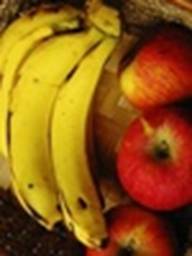
"B" is for Banana !
After reading THIS, you'll NEVER look at a banana in the same way
again!
Bananas containing three
natural sugars - sucrose, fructose and glucosecombined with fiber, a banana gives an instant, sustained and substantial boost
of energy. Research has proven that just two bananas provide enough energy for a strenuous 90-minute workout.
No wonder the banana is the number one fruit with the world's leading athletes. But energy isn't the only way a
banana can help us keep fit. It can also help overcome or prevent a substantial number of illnesses and conditions,
making it a must to add to our daily diet.
Depression:
According to a recent survey undertaken by MIND amongst people
suffering from depression, many felt much better after eating a banana. This is because bananas contain tryptophan, a type
of protein that the body converts into serotonin, known to make you relax, improve your mood and generally make you
feel happier.
Anemia:
High in iron, bananas can stimulate the production of hemoglobin in the blood and so helps in
cases of anemia.
Blood Pressure:
This unique tropical fruit is extremely high in potassium yet low in salt, making it
the perfect way to beat blood pressure. So much so, the US Food and Drug Administration have just allowed
the banana industry to make official claims for the fruit's ability to reduce the risk of blood pressure and stroke.
Brain
Power:
200 students at a Twickenham (Middlesex) school were helped through Their exams this year by eating bananas
at breakfast, break, and lunch in a bid to boost their brain power. Research has shown that the potassium-packed
fruit can assist learning by making pupils more alert.
Constipation:
High in fiber, including bananas in the diet can
help restore normal Bowel action, helping to over! come the problem without resorting to laxatives.
Heartburn:
Bananas
have a natural antacid effect in the body, so if you suffer From heartburn, try eating a banana for soothing relief.
Morning
Sickness:
Snacking on bananas between meals helps to keep blood sugar levels up And avoid morning sickness.
Overweight
and at work?
Studies at the Institute of Psychology in Austria found pressure at Work leads to gorging on comfort
food like chocolate and chips. Looking at 5,000 hospital patients, researchers found the most obese were more
likely to be in high-pressure jobs. The report concluded that, to avoid panic-induced food cravings, we need! to
control our blood sugar levels by snacking on high carbohydrate foods every two hours to keep levels steady.
Ulcers:
The
banana is used as the dietary food against intestinal disorders because of its soft texture and smoothness. It
is the only raw fruit that can be eaten without distress in over-chronicler cases. It also neutralizes over-acidity
and reduces irritation by coating the lining of the stomach.
Temperature control:
Many other cultures see bananas
as a "cooling" fruit that can lower Both the physical and emotional temperature of expectant mothers. In Thailand, for
example, pregnant women eat bananas to ensure their baby is born with a cool temperature.
Smoking:
Bananas can
also help people trying to give up smoking. The B6, B12 They contain, as well as the potassium and magnesium found
in them, help thebody recover from the effects of nicotine withdrawal.
Stress:
Potassium is a vital mineral, which
helps normalize the heartbeat, Sends oxygen to the brain and regulates your body's water balance. When weare
stressed, our metabolic rate rises, thereby reducing our potassium levels. These can be rebalanced with the help of a high-potassium bananasnack.
Strokes:
According
to research in "The New England Journal of Medicine," eating bananas as part of a regular diet can cut the risk of death by
strokes by as much as 40%!
So, a banana really is a natural remedy for many ills. When you compare it to an
apple, it has four times the protein, twice the carbohydrates, three times the phosphorus, five times the vitamin A and iron,
and twice the other vitamins and minerals. It is also rich in potassium and is one of the best value foods around.
So maybe its time to change that well-known phrase so that we say, "A banana a day keeps the doctor away!"
TELL A
FRIEND!

Super size me!
McDojo is an example of McWords applied to martial
arts and a pejorative term used by some Western martial artists to describe a martial arts school where image or profit is
of a higher importance than technical standards. A McDojo of Korean martial arts is usually called a McDojang. A McDojo
(used as a noun) is a martial arts school of any style that uses specific business practices or principles for the purpose
of generating revenue for the school. McDojo as an adjective is applied to indicate that a particular action or practice by
a school is motivated primarily by financial gain. While using the term McDojo primarily indicates judgment of a school’s
financial or marketing practices, it does somewhat imply that the teaching standards of such school cater towards the lowest
common denominator.
Top Nine Signs You're in a "McDojo"
9.
You instructor has a "Grandmasters" Certificate. In Crayon.
8. The Assistant Instructor is a 5 year old black belt.
7. The sign in the window says the school trains in more than 10 martial arts.
6. Your instructor tries to sell you
Amway products.
5. While examining the schools tournament trophies, you find 3 for spelling bees.
4. Reading the contract
for the school is considered a kata and a long one.
3. No one sweats.
2. While at a tournament, your opponent finds
out who your teacher is and high-fives his teacher.
1. When paying for your contract, the instructor asks: "Do you want
fries with that?"
"More
Quoates I Like"
Ability may
get you to the top, but it takes character to keep you there.
Your future
depends on many things, mostly on you.
Nobody who
ever gave his best regretted it.
It is easier
to do a job right than to explain why you didn't.
We cannot direct
the wind, but we can adjust the sails.
Small opportunities
are often the beginning of great enterprises.
A mind that
has been stretched will never return to its original dimension.
If you are
going to be thinking, you may as well think big.
One thing you
can't recycle is wasted time.
History
In its earliest stages, the martial art known, as "karate" was an indigenous form of
closed fist fighting, which was developed in Okinawa, referred to as "Te" or "hand". Weapons bans, imposed upon the
Okinawans at various points in history, encouraged the refinement of empty hand techniques. For this reason, "Te" was
trained in secret until modern times. Further refinement came with the influence of other martial arts introduced by nobles
and trade merchants to the Island.
Te continued to develop over the years, primarily in three Okinawan cities:
Shuri, Naha, Tomari
Each of these towns was a center to a different sect of society; the aristocracy (kings and
nobles), the middle class (merchants and business people) and the fisherman and farmers, respectively. For this reason, different
forms of self-defense developed within each city and subsequently became know as
Shuri-te, Naha-te, Tomari-te
Collectively these practices or early systems were called Okinawa-Te or "Tode",
meaning Chinese Hand
The first demonstration of "Karate" took place in Japan in 1917 when Gichin Funakoshi
performed at the Butoku-den in Kyoto. This and subsequent demonstrations not only greatly impressed many Japanese,
but drew the attention and enthusiasm of the Crown-Prince Hirohito.
The first demonstration of Karate takes place in Tokyo which was supported by Jigoro
Kano, the founder of Judo.
Karate was still not a codified system and was not considered a "legitimate martial
art" due to the prejudice of the Japanese populace toward the Okinawans.
Yasuhiro Konishi, a board member of the Dai Nippon Butokukai (the sanctioning
body for martial arts in Japan) becomes interested in Karate in 1924.
In 1935, Konishi succeeded in having Karate accepted as a legitimate martial art and registered
the system with the Dai Nippon Butokukai. With this, a formalized curriculum was established for each "ryu" or system
of Karate as a requirement for sanctioning.
Six systems are registered:
- Goju-ryu under Chojun Miyagi
- Shito-ryu under Kenwa Mabuni
- Wado-ryu under Hirononri Ohtsuka
- Shotokan under Gichin Funakoshi
- Kushin-ryu under Ueshima Sannosuke
- Shindo Jinen-ryu under Yasuhiro Konishi
From the six original systems, four of them became very popular and established themselves as
the primary systems within Japan:
- Goju-ryu
- Shito-ryu
- Shotokan
- Wado-ryu
GOJU-RYU
Developed out of Naha-te
Its popularity was primarily due to the teaching success of Kanryo Higaonna (1853-1915) who
opened a dojo (school) in Naha using eight forms brought/introduced form China.
The best student of Higaonna was Chojun Miyagi (1888-1953) who founded the formal system
of "hard/soft way" or "Goju-ryu".
A signature quality in this system is the emphasis that is placed upon combining soft circular
blocking techniques with quick strong counter techniques delivered in rapid succession.
SHITO-RYU
Founded by Kenwa Mabuni (1888-1952)
A system influenced by both Naha-te and Shuri-te.
The name "Shito" is constructively derived from the combination of the Japanese characters
of Mabuni's teacher's names; Ankoh Itosu and Kanryo Higaonna.
Shito-ryu schools house a large number of Kata, each with over fifty.
Shito-ryu is characterized not only by its emphasis upon execution of techniqes, but
with the economy of movement as well.
SHOTOKAN
Founded by Gichin Funakoshi (1868-1957)
Funakoshi studied karate with Yasutsune Azato one of Okinawa's foremost experts in the
art.
In 1936 Funakoshi opened his own training hall, which was called "Shotokan" after the
pen name he used for those poems he authored in his youth.
Shotokan Karate is characterized by it powerful and linear techniques coupled with deep
strong stances which were developed to accommodate the larger physical statures of Japanese practitioners.
WADO-RYU
A system of Karate developed from jujitsu and karate techniques by Hironori Otsuka.
Means "Way of Harmony"
Otsuka was already a master of Yoshin-ryu jujutsu when he was introduced to Karate.
This style of Karate combines basic movements of jujitsu with techniques of evasion
with a strong emphasis on softness or "the way of harmony". Spiritual discipline is a hallmark characteristic of the Wado-ryu
work ethic.
FORMS
Kata is the essence of Karate-do. With variations in basics (kihon) and names,
these libraries of techniques have been handed down from generation to generation as an important part of each system's pedagogy.
At the most basic levels of instruction, these prearranged patterns of self-defense techniques will serve to develop the physical
and emotional standards of the Karate-ka or practitioner. As the Katas are practiced, imprinted and perfected, these
theoretical or hypothetical circumstances transform the karate-kA into a mature and controlled citizen of the world. Kata
expression reveals the Karate-ka's inner nature and individuality underlining one's determination to bring all personal
elements to the betterment of humanity at large.
There is no absolute or singularly correct application inherent in the respective Katas. However,
the series of movements have definite applications interpreted by each system. Therefore, through the International Federation
for the sport of karate, there has been developed standardization for the order of Kata execution or the sequence of techniques
within the context of eight Katas representing the four major Karate systems. The major contributor to this effort has been
made through the Japan Karate Federation.
MANDATORY (SHITEI) KATAS
Approximately 1990, with the contribution and assistance of the Japan Karate Federation,
the four major styles of Karate were represented through eight Katas, each System's kihon or fundamentals, being properly
demonstrated in to of these "sample" Katas from each style. It was the first major step toward a consensus as to the accepted
technique/s within each system's pedagogy in an effort to canonize Karate-do principle and "wasa" through the medium
of sport. Since that time, the competition rules have changed in regard to Kata, however, the same eight Katas of the J.K.F.
remains the same although the objective criteria has changed.
Style Katas:
Goju
Shoto
Shito
Wado
Major Kata
Major Kata List of the World Karate Federation. Tokui or Open Katas from the respective systems:
Goju-ryu Katas
- Sanchin
- Saifa
- Seiyunchin
- Shisochin
- Sanseru
- Seisan
- Seipai
- Kururunfa
- Suparimpei
- Tensho
Wado-ryu Katas
- Kushanuku
- Naihanchi
- Seihan
- Chinto
- Passai
- Niseishi
- Rohai
- Wanshu
- Jion
- Jitte
- Suparimpei
Shotokan Katas
- Bassai-Dai
- Bassai-Sho
- Kanku-Dai
- Kanku-Sho
- Tekki-Shodan
- Tekki-Nidan
- Tekki-Sandan
- Hangetsu
- Jitte
- Enpi
- Gankaku
- Jion
- Sochin
- Nijushiho Sho
- Goju Shiho-Dai
- Goju Shiho-sho
- Chinte
- Unsu
- Meikyo
- Wankan
- Jiin
Shito-Ryu Katas
- Jitte
- Jion
- Jiin
- Matsukaze
- Wanshu
- Rohai
- Bassai Dai
- Bassai Sho
- Tomari Bassai
- Matsumura Bassai
- Kosokun Dai
- Kosokun Sho
- Kosokun Shiho
- Chinto
- Chinte
- Seiechin
- Sochin
- Niseishi
- Gojushiho
- Unshu
- Seisan
- Naifanchin Shodan
- Naifanchin Nidan
- Naifanching Sandan
- Aoyagi (Seiryu)
- Jyuroku
- Nipaipo
- Sanchin
- Tensho
- Seipai
- Sanseiru
- Saifa
- Shisochin
- Kururunfa
- Suparimpei
- Hakucho
- Pachu
- Heiku
- Paiku
- Annan
- Annanko
- Papuren
- Chatanyara Kushan
FINDING THE WAY
A NEW STUDENT
APPROCHED HIS KARATE MASTER ONE DAY AND ASKED,
"HOW LONG MUST I STUDY TO BECOME THE BEST MARTIAL ARTIST IN THE LAND?"
"TEN YEARS,AT LEAST,"THE MASTER ANSWERED.
"TEN YEARS IS A LONG TIME," SAID THE BOY. "WHAT IF I STUDIED TWICE AS HARD
AS ANYONE ELSE?"
"TWENTY YEARS, " REPLIED THE MASTER.
"WHAT IF I PRACTICE NIGHT AND DAY, WITH ALL MY HEART AND SOUL?"
"THIRTY YEARS," WAS THE MASTER'S REPLY
"HOW CAN THAT BE? EACH TIME I SAY I WILL WORK HARDER, YOU TELL ME THAT IT WILL
TAKE LONGER. WHY?' THE BOY ASKED.
"THE ANSWER IS CLEAR. WHEN ONE EYE IS FIXED UPON YOUR DESTINATION, THERE IS ONLY ONE
EYE LEFT WITH WHICH TO FIND THE WAY."
BEAR FOOT
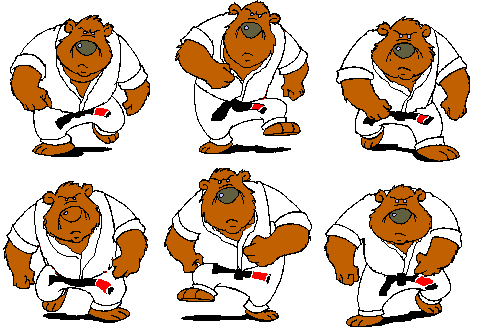
Why train barefoot? This is a question that I get all the time. To say that,"to train
without shoes is traditional" may be the best thing I can say about it . The origins of bare foot training started when men
of the culture and period did not were shoes there for it made sense to train in bear feet to make it more realistically for
self defense If those same men where training today I think they would wear shoes. Ask your self this, how many times do you
go outside in your bare feet? (Having said this now I still like to take off my shoe and train 1 or 2 times for every 10 times
I train.) There is much to be said for training in a nice pair of Pine trees or Asics Gels, they are made for martial artist
and give good support for your feet . Odds are it is what you will have on if you do have to defend yourself or your loved
ones out in the real world. So give shoes a try ,It may take some getting use to at first but after some time you
will feel great .
KEEPING IT FRESH
Over the past 10 years, Sensei Kevin
has created a highly successful teaching technique that incorporates character building philosophies with traditional
martial arts training methods.
With younger students, we focus on helping
them to understand and use the martial arts in order to develop discipline, self control, and respect. We also help them to
establish healthy life style habits at an early age.
With older students, we enjoy sharing
the secrets and intricacies of the modern Kempo way. Our unique style of traditional martial arts training, ju jitsu
workouts, and stress reducing Chi Kung sets, allow individuals to gain the physical benefits, and confidence that can
only be achieved through effective self defense training.
We as Kempo Kai should always be on the look
out for what works and what does not, this is the only true way of Kempo. This is why Sensei Kevin has gone out of the
Kempo systems with Arnis, Goju Ryu, Kobudo, Ju Jitsu and Shotokan to bring back what really works.
"No matter what art a technique comes from,
if it works, it is Kempo!"
"NO EGO, JUST KEMPO"
SENSEI KP
" There are three ways to do things: The wrong way,
the proven way and a better way."
Remember Karate is traditional in has been passed down for years, keep the tradition.
"Obstacles
present an opportunity to improve one's condition".
Don't let obstacles stop you from reaching your goals or being the
best you can be. Let adversity be your teacher. You can learn more from difficult experiences than you can from easy ones.
"There are two rules for being successful in Martial Arts.
Rule 1: Never tell others everything you know."
"a one sided martial artist is a blind martial artist"-unknown
"Pain is the best instructor, but no one wants to go to his class."
Choi, Hong Hi Founder of
Taekwon-Do
"He who hesitates, meditates in a horizontal position"
-Ed Parker
"A black belt is nothing more than a belt that goes around
your waist. Being a black belt is a state of mind and attitude."-Rick English
"It is not the accumulation of extraneous knowledge, but
the realization of the self within, that constitutes true progress."- Okakura Kakuzo
"The art of the sword consists of never being concerned
with victory or defeat, with strength or weakness, of not moving one step forward, nor one step backward, or the enemy not
seeing me and my not seeing the enemy. Penetrating to that which is fundamental before the separation of heaven and earth
where even yin and yang cannot reach, one instantly attains proficiency in the art."- Takuan
"To win one hundred victories in one hundred battles is
not the highest skill. To subdue the enemy without fighting is the highest skill."-Sun-Tsu
"A Man Who Has Attained Mastery of An Art Reveals It in
His Every Action.
"Five Secrets of Japanese Goju Ryu.
Move quickly.
Sound, calm mind.
Be light in body.
Have
a clever mind.
Master the basics."
- Gogen Yamaguchi
"Even though surrounded By several enemies set to attack,
Fight with the thought That they are but one." - Ueshiba
"The sword has to be more than a simple weapon; it has
to be an answer to life's questions."- Miyamoto Musashi
"The way of the sword and the Way of Zen are identical,
for they have the same purpose; that of killing the ego." - Yamada Jirokichi
"Sword and mind must be united. Technique by itself is
insufficient, and spirit alone is not enough." - Yamada Jirokichi
"The ultimate aim of karate lies not in victory or defeat
but in the perfection of the character of its participants." - Gichin Funakoshi
"Where questioning is rewarded, virtues are promoted, respect
is demanded, and love
is
central........"-L'abri
Traditionalists often study what is taught, not what there
is to create." - Ed Parker, Grandmaster, American Kenpo.
--------------------------------------------------------------------------------
"If you don't realize you can kill someone with
a bokken, I don't want you using one in *MY* dojo..." - Frederick J. Lovret
--------------------------------------------------------------------------------
"The fastest draw is when the sword never leaves
the scabbard,
The strongest way
to block, is never to provoke a blow,
And the cleanest cut is the one withheld."
--------------------------------------------------------------------------------
"The ultimate aim of karate lies not in victory nor defeat, but
in the perfection of the character of its participants." -- Master Gichin Funakoshi
--------------------------------------------------------------------------------
"Karate is a defensive art from beginning to end"
- Gichin Funakoshi
--------------------------------------------------------------------------------
"Knowledge does not grow like a tree where you dig
a hole, plant your feet, cover them with dirt, and pour water on them daily. Knowledge grows with time, work, and dedicated
effort. It cannot come by any other means." -- Ed Parker.
--------------------------------------------------------------------------------
"The Ryukyu Islands (Okinawa) were conquered and
united into one kingdom. To insure his rule, the king confiscated and banned possession of weapons by people other than his
troops. A second ban on weapons was instituted by Japanese conquerors approximately 200 years later. These two incidents are
generally credited as the cause for the intense development of the emptyhanded fighting techniques..." -- Special Forces (USA)
manual ST 31-204
--------------------------------------------------------------------------------
My instructor once told me that the first five dan
ranks come for what you've gotten out of the system, the next ranks come for what you've given back.
--------------------------------------------------------------------------------
"You may train for a long time, but if you merely
move your hands and feet and jump up and down like a puppet, learning karate is not very different from learning a dance.
You will never have reached the heart of the matter; you will have failed to grasp the quintessence of karate-do." - Gichin
Funakoshi
--------------------------------------------------------------------------------
"We tottered together upon the brink of the fall.
I have some knowledge, however, of baritsu, or the Japanese system of wrestling...I slipped through his grip..." The Return
of Sherlock Holmes
--------------------------------------------------------------------------------
The FAQ that can be read is not the True FAQ
The answers that can be posted are not the True Answers.
The Superior Man hears not the whining of newbies
and is not singed by the flames of the Net.
Belts do not bind him, nor trophies burden him.
Discarding all, he gains all, and follows the Way.
Got any spare change, pal?
-- Lao-tzu, as paraphrased on rec.martial-arts
--------------------------------------------------------------------------------
"Aikido is not a defensive martial art. Being defensive
is a terrible way to go through life." -quote on a dojo wall. This means be proactive. It does not mean hit first.
--------------------------------------------------------------------------------
"An unwillingness to deal forcibly with violence
does not equate to moral rectitude." -- Mary Malmros
--------------------------------------------------------------------------------
"It should be easy to spot a black belt in a crowd, s/he should
walk like a Marine on roller skates" - Fredrick Lovret
--------------------------------------------------------------------------------
I am a Cobra And these Words are my Venom And through My Magickal
Lore I shall capture your Mind And Spew My Poison into Your Eyes Then My world will become Your world And You Shall Die --
Some Twit on rec.martial-arts who let his prozac perscription run out.
--------------------------------------------------------------------------------
"We staunch traditionalists know that appearence
is everything. Technique is nowhere near as important as having your pleats straight when you die" - Steve Gombosi
--------------------------------------------------------------------------------
When in trouble or in doubt, Cut down all who move
about. - Frederick J. Lovret
--------------------------------------------------------------------------------
"When in doubt, knock 'em out" - "Big" Vinny Girolamo
- NY Hell's Angels
--------------------------------------------------------------------------------
Never leave an enemy standing. - Shaka Zulu (the
original one, King of the Zulu Nation...not the American karate instructor who appropriated his name)
--------------------------------------------------------------------------------
He who hesitates, meditates in the horizontal position.
-- Edmund K. Parker
--------------------------------------------------------------------------------
"When pure knuckles meet pure flesh, that's pure
Karate, no matter who executes it or whatever style is involved." -- Ed Parker
--------------------------------------------------------------------------------
"When two tigers fight, one is certain to be maimed,
and one to die." -- Master Funakoshi
--------------------------------------------------------------------------------
"Of those who start TaeKwonDo training, only about 5% stick with
it until they achieve the Black Belt Rank. Then perhaps 80% of those who earn a Black stop there." (Duk Sung Son, Black Belt
Korean Karate)
--------------------------------------------------------------------------------
"1-2 out of every 100 students reach Black Belt
and of those only 1 out of every 1,000 achieves his 2nd Dan. ( Masutatsu Oyama, This is Karate.)
--------------------------------------------------------------------------------
"We are creating a fighting force of extra-ordinary
measure! We forge our bodies in the spirit of our ancestors." - Kentucky Fried Movie: Fistfull of Yen.
--------------------------------------------------------------------------------
"The Time to Strike is When the Opportunity Presents
Itself." -- 6th Code of Isshinryu Karatedo
--------------------------------------------------------------------------------
"Hoping to see karate included in the universal physical education
taught in our public schools, I set about revising the kata so as to make them as simple as possible. Times change, the world
changes, and obviously the martial arts must change too. The karate that high school students practice today is not the same
karate that was practiced even as recently as ten years ago [this book was written in 1956], and it is a long way indeed from
the karate I learned when I was a child in Okinawa."
- Gichin Funakoshi, in his book "Karate-do: My Way of Life" (page 35-36):
--------------------------------------------------------------------------------
"It's not just self defense, it's about...self control,
body discipline, and mind discipline...and breath techniques. It involves yoga. It involves meditation. It's an art, not a
sport." - Elvis Presley.
--------------------------------------------------------------------------------
The Art of Peace is medicine for a sick world. There
is evil and disorder in the world, because people have forgotten that all things emanate from one source. Return to that source
and leave behind all self-centered thoughts, petty desires, and anger. Those who are possessed by nothing possess everything.
-- Morihei Ueshiba (O'Sensei)
--------------------------------------------------------------------------------
The teaching of one virtuous person can influence
many; that which has been learned well by one generation can be passed on to a hundred. -- Jigoro Kano (1860-1938)
--------------------------------------------------------------------------------
"follow not in the footsteps of the masters, but
rather seek what they sought"
--------------------------------------------------------------------------------
If you can't beat your computer at chess, try kick-boxing.
--------------------------------------------------------------------------------
"'Ow' is not a Kempo word" - Jonathan Vance
--------------------------------------------------------------------------------
"Truth is universal. Perception of truth is not."
"No one nation or people has a monopoly on the sun and no one art or
system as a monopoly on truth." - Mike Casto
-------------------------------------------------------------------------------
"That which does not kill us, must have missed us."
- Miowara Tomokata
--------------------------------------------------------------------------------
"You are reconsidering your training, or perhaps even contemplating beginning
a new system. You have been told by the teacher that to obtain proficiency, you may have to train hard for the next two to
three years. You begin to wonder if all of that time out of your life is really worth it. No matter what your choice is, your
going end up there anyway in two to three years with or without the training." - Michael R. Boyce
"There
are people who dream of success, and there are people who go out and succeed"
There are some people who just dream of
being a Black Belt,while there are others who put years of hard training in to achieve their Goal.
" In every pain
there is tremendous opportunity for overwhelming gain! Use it to your advantage!"
Train hard push you karate to your limits
then push a little more. You will then feel the benefits!
"Fear is in the eye of the beholder, don`t let it be you".
" It's not how far you fall, But how high you bounce
back."
" Failure doesn't mean you are a failure; It just
means you haven't succeeded yet."
Like it says, keep trying & you will reach your Goal in time.
" Don't be discouraged; Everyone who got where they
are today, Started knowing nothing!"
Do you know alot or a little? It does not matter as long as it has been fun to learn.
" A true friend never gets in your way unless you
happen to be going down."
" Is it half full? Half empty? I am not sure but I'll
enjoy what I have."
" All you can ever do, is the very best that you can."
Always
give 100% to your training, you will then feel like you have succeeded.
" A winner never quits, a quitter never wins."
Train
HARD!
8 Ways to Burn Calories Without Noticing
Think you don't have time to exercise? Try some of these tricks
for burning more calories during the day.
1. Elevate Yourself
Take the
escalator--but climb the stairs while you ride. You'll get there faster and use your muscles while you're at it. Just 5 minutes
of stair climbing burns 144 calories.
2. It's a Trip
Instead of piling items
on the stairs so you can take them upstairs at once, take them one at a time.
3. Stand Tall
When cooling your heels
while waiting in a doctor's office, drugstore, or airport, stay on your feet--standing burns 36 more calories per hour than
sitting.
4. Leave Excuses at Home
Rake leaves
instead of using a leaf blower: You'll burn 50 more calories every half hour.
5. Elbow Grease
Scrub your floors more
often. Putting some elbow grease into cleaning floors is more intense than vacuuming--and it makes your floors look better
to boot.
6. Hubba Bubba
Chew sugarless Gum.
Research has found that the action of jaw muscles alone burns about 11 calories an hour.
7. Scrubbing Bubbles
Wash your car
by hand instead of taking it through the automatic carwash. You'll burn an extra 280 calories in an hour.
8. Game Time
Play with the kids. Impromptu
games of basketball, touch football, or tag--or just jumping rope or throwing a ball--will help you use energy and set a good
example of active play for the children. Calories burned: 80 to 137 every 10 minutes.
Sports like karate boost strength and balance, study finds
By E.J. Mundell, HealthDay Reporter
THURSDAY, March 25 (HealthDayNews) -- Baby boomers bent on getting back into
shape may want to give their love handles a karate chop: A new study finds the martial arts to be safe, effective exercise
for 40- and 50-somethings.
"If you want to do something that's fun, different and good for self-defense -- and good for long-term
self-defense against disease -- do the martial arts," says study author and physical therapist Dr. Peter Douris, of the New
York Institute of Technology in Old Westbury, N.Y.
His findings appear in the March 25 issue of the British Journal of Sports Medicine.
For most people, the decision to get fit usually means buying a gym membership or shelling out money
for expensive home-exercise equipment. But what about alternative methods, such as practicing the martial arts?
In their study, Douris' team examined the overall fitness of 18 individuals between 40 and 60 years
of age. Nine of the study participants had been practicing soo bahk do, a Korean martial art similar to karate or tae kwon
do, for about three years. The other nine participants maintained a more or less "couch potato" lifestyle.
Overall, the soo bahk do devotees "were much more flexible, had more leg strength, less body fat, better
aerobic conditioning and better balance" compared to the sedentary study subjects, Douris reports.
The martial art practitioners had an average 12 percent less body fat than the non-exercisers, the
researchers report. They also seemed much stronger -- while sedentary types could only muster up 37 sit-ups in a row on average,
the soo bahk do practitioners averaged 66 sit-ups before exhaustion set in. The martial arts group also displayed more than
double the balancing power of non-exercisers and outperformed the sedentary types when it came to flexibility.
The study did not compare the benefits of the martial arts to that of gym workouts, running or other
fitness options. However, Douris estimates that the average soo bahk do class raises students' metabolic level -- a measurement
of changes in the metabolic rate -- to about a 10, a level equal to that of jogging.
And he believes that older individuals, especially women, needn't be put off by fears they will be
injured trying out karate-like sports. "It's not like ju-jitsu or judo, where you're doing a lot of flips and throws," Douris
explains. "There isn't that much of that in soo bahk do. You do fall down when you're 'free-sparring,' but there's people
in the classes that are 60 years old -- they get right back up. There's plenty of women in these classes, too."
Dr. Douglas McKeag, a sports medicine expert at Indiana University in Indianapolis, believes the martial
arts "are a perfectly acceptable way to boost fitness, certainly in middle age it makes a great deal of sense. The sport is
capable of delivering the type of stimulus that the body needs to get in shape." But he cautions that, as with any new sport,
beginners "have to come at it relatively slowly and intelligently."
Douris, 47, has been practicing soo bahk do and tae kwon do since he was a teenager and says he routinely
beats competitors half his age in tournaments. He calls the sport "self-defense against aging."
In a second study, researchers at the University of California, Irvine, found that another one-on-one
contact sport, wrestling, boosts the immune system of adolescent boys.
The researchers measured levels of immune system white blood cells in blood samples from wrestlers
aged 14 to 18 years old, taken before and after a typical 90-minute wrestling bout.
Wrestling appears to produce "significant and robust" elevations in immune cells, indicative of a healthy
rise in immune function, the researchers report.
The finding came as no surprise to McKeag. "The fact is that wrestling, as with any form of exercise,
can keep a person healthy." Exercise stimulates all of the body's organs, he says, including the lungs, heart and other vital
structures, creating "a much more efficient body."
Get tips on getting physically fit from the President's Council on Physical Fitness and Sports or the American College of Sports Medicine.
content by:
SOURCES: Peter Douris, Ed.D., physical therapist, New York Institute
of Technology, Old Westbury, N.Y.; Douglas McKeag, M.D., M.F., director, Indiana University Center for Sports Medicine, Indianapolis;
March 25, 2004, British Journal of Sports Medicine
What's the Best martial art?....... There is No such thing!
The Art of the silver tongue and fleeted foot. One which promotes improvisation, adaptability
and mental preparedness. Each style has its usefulness. Its not which is best but what is best suited to you.
Ssttrreess!!!
Just in case you've had a rough day or a rough
week, here's a stress management technique recommended in all the latest psychological texts. The funny thing is
that it really works.
1. Picture yourself near a stream.
2. Birds are softly chirping in the cool mountain
air.
3. No one but you knows your secret place.
4. You are in total seclusion from the hectic place called
"the world,".
5. The soothing sound of a gentle waterfall fills the air with a cascade of serenity.
6.
The water is crystal clear.
7. You can easily make out the face of the person you're holding underwater.
8.
See, you're smiling already
I would like to Thank all who have helped me "along the path"...
my Family, Teachers, Friends & all the members of my Martial Arts Family. Yours
in the Arts; Kevin Pence Sr. Sensei
Pence
Self-Defense Academy
226
Cambridge St. Burlington MA 01803 U.SA. (781)
272-9709or (877) -KARATE-U.S.A
527-2838 Copyright Vigorously enforced. © 2000-2012
|